Hey there, thanks for stopping by my corner of the web. If you’re deep in the market for ball screw support bearings—whether you’re a machinist cranking out custom parts, an automation engineer building a new assembly line, or someone just trying to troubleshoot a sticky linear motion setup—you’ve probably asked the same question I get every single week: “What’s the price range of these things?” Ball Screw Support Bearings
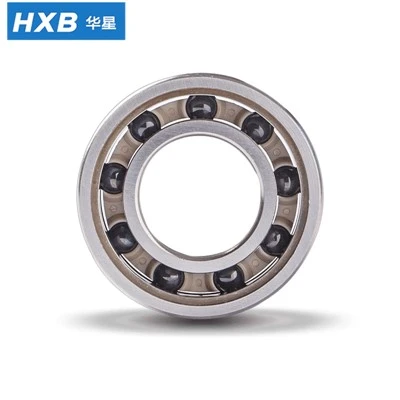
Full disclosure: I run a small, family-owned ball screw support bearings shop (yeah, no fancy corporate jargon here) and I deal with this exact question so often I could probably answer it in my sleep. But here’s the thing—there’s no one-size-fits-all number, and if any supplier tries to tell you a flat rate, they’re either blowing smoke or haven’t done their homework. Let’s break this down like we’re chatting over a coffee (my treat, in this virtual world).
First off, let’s get the basics straight for anyone who might be new to the game. Ball screw support bearings aren’t just your average bearing. They live on the ends of a ball screw—those long, threaded rods that move stuff smoothly in CNC machines, 3D printers, robotic arms, even medical devices like MRI scanners. They handle axial loads (the back-and-forth push/pull) and keep the ball screw aligned so it doesn’t wobble. Mess up the bearing choice, and your whole system will be jittery, wear out fast, or even break down mid-job. So price here isn’t just about the part—it’s about what it’s actually designed for.
Now, let’s talk about the real price ranges, but caveat after caveat. We split these into three main categories based on what they’re used for, and that’s where the numbers shift hard.
The bottom of the barrel, so to speak, is the entry-level stuff. These are usually made for small, low-precision applications—think hobbyist 3D printers, mini CNC routers that do simple cuts, or small automation parts that don’t need super tight alignment. I’m talking bearings with less refined steel, maybe not much in the way of precision grinding, and often made in facilities that crank out hundreds of thousands a month without much quality checks. You can grab a pair of these for… wait for it… $15 to $50 total. Yeah, that’s not a typo. But hold on—don’t get excited about saving cash here. I’ve had customers come back to me because those $20 bearings on Amazon died in 6 months when they were supposed to last 5 years. The steel is thinner, the tolerances are looser, so they wear faster and can’t handle much load. If you’re only doing occasional hobby work, no problem. But if this is for your business, skip this level.
Next up is the mid-range, which is where most of my customers live. These are the industrial-grade bearings for small to medium CNC machines, medium robotic arms, packaging equipment, or medical devices that don’t need the absolute highest precision but still can’t afford downtime. We’re talking bearings made from high-grade chrome steel, precision-ground to tight tolerances (like ABEC 5 or 7, if you know those terms), sealed to keep out dust and debris, and tested to handle consistent loads. A single bearing here usually runs $40 to $150, so a pair is $80 to $300 total. Wait, why the big gap in that mid-range? Because it depends on size. A tiny bearing for a mini CNC is $40-$60 each, while a larger one for a 1-meter ball screw is $100-$150 each. And if you get paired bearings with pre-load built in (super important for keeping alignment), that adds a bit, but it’s worth every penny. Our mid-range bearings last 5-10 years with regular maintenance, no surprise breakdowns. I sell a ton of these—they strike the balance between cost and performance that most small to medium businesses need.
Then there’s the top tier, the high-precision ones. These are for applications where even a 0.001mm wobble will ruin a part—think aerospace components, large CNC mills for automotive parts, 5-axis machining centers, or semiconductor equipment. These bearings are made from super high-quality vacuum-degassed steel, precision-ground to ABEC 9 standards (the tightest common tolerance), often with ceramic rolling elements for less friction and more heat resistance, and double-sealed with labyrinth seals to keep out even the tiniest particles. These aren’t cheap. A single bearing here can run $200 to $800 each, so a pair is $400 to $1,600 total. And if you need custom sizes or special coatings (like for corrosion resistance in food processing), that can push it even higher. I don’t sell these to hobbyists—only to engineers who know exactly why they need them. But when they do, they’ll pay up because downtime here costs thousands an hour, not dollars a day.
Wait, but there are other factors that throw these numbers off. Let’s say you need custom bearings—something not off the shelf, like a weird size for an old machine that can’t use standard parts. That’ll add 20-50% to the price, because we have to tool up for a run, test it, make sure it fits. Then there’s quantity: if you need 100 pairs for a new production line, I can cut you a bulk discount—sometimes 15-25% off the per-unit price, because we can set up the production line once instead of making small batches. On the flip side, if you only need one replacement bearing for a 10-year-old machine, that’s a higher per-piece cost, because it’s a small order for us.
Also, let’s talk about what you’re actually paying for, because a lot of new customers don’t get this. The $15 entry-level bearing doesn’t come with any technical support—if it breaks, you’re on your own. The mid-range ones I sell come with data sheets, so you know exactly what load they can handle, what speed they’re rated for, and I’ll answer any question you have about installation. The top-tier ones come with full testing reports, and my team will work with your engineering team to make sure they fit your exact ball screw. So price isn’t just the part itself—it’s the support, the warranty, and the peace of mind that it won’t leave you stranded on a deadline.
I’ve seen so many customers make the mistake of buying the cheapest bearing they can find, only to have it mess up a big order. Last year, a small machine shop brought me a ball screw that had two $20 bearings on it—they’d had a part reject rate of 12% because the bearings were wobbling. Swapped them for our mid-range ones, and the reject rate dropped to 0.2%. That $60 investment ended up saving them thousands in scrap. So when you’re looking at price, don’t just look at the upfront cost—look at the total cost of ownership.
Now, if you’re here and thinking, “Okay, what do I need for my project?” That’s where chatting with me helps. I don’t do pushy sales pitches—I’ll ask you what machine you’re using, what kind of parts you make, how fast the ball screw moves, how much load it’s under, and whether downtime would be a big issue. Then I can give you a specific price and a recommendation, no guesswork.
Look, I’ve been in this business for 12 years, and the biggest headache I see is people getting quoted a price from a supplier that’s too low, only to find out it’s not the right bearing for their job. Or getting a quote that’s way higher than they need to pay because the supplier is upselling them on a precision bearing when an entry-level one would work. My job is to give you the real story, not just a number.
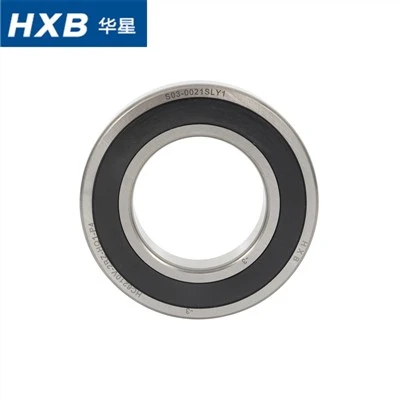
If you’re tired of guessing, if you need a quote for a pair of ball screw support bearings, or if you have questions about which type is right for your setup, hit me up. No awkward forms, no fancy hoops to jump through—just tell me what you need, and I’ll get back to you with a clear, honest price and a recommendation. I’m not here to sell you something you don’t need, I’m here to make sure your linear motion works like it’s supposed to.
Servo Motor Bearings References:
- ANSI/ABEC Standard 1-2014, Precision Levels for Rolling Bearings
- Ball Screw and Support Bearing Application Guidelines, Motion Control Association, 2021
- Industrial Linear Motion Component Cost Benchmark Report, Industry Insights Group, 2023
Hangzhou Huaxing Kechuang Holding Group Co., Ltd.
Hangzhou Huaxing Kechuang Holding Group Co., Ltd. is one of the leading manufacturers and suppliers of ball screw support bearings in China, featured by quality products and good service. Please rest assured to buy bulk durable ball screw support bearings from our factory. Welcome to view our website for more information.
Address: No.553 Yingbin Road, Linping, Hangzhou, 311100, China
E-mail: wmb@huaxingbearing.com
WebSite: https://www.hxbbearing.com/
