Alright, let’s talk about the wild, weird, and wonderful history of amusement facilities—because if you’ve ever ridden a rollercoaster, screamed on a Drop Tower, or just hung out at a mini-golf course, you’ve felt a tiny piece of this messy, epic journey. And since I’m the guy who supplies the stuff that makes those moments happen, I’ve spent way too many late nights geeking out over where it all started (pro tip: it’s not just 1800s theme parks—we’re going way back). Amusement Facilities
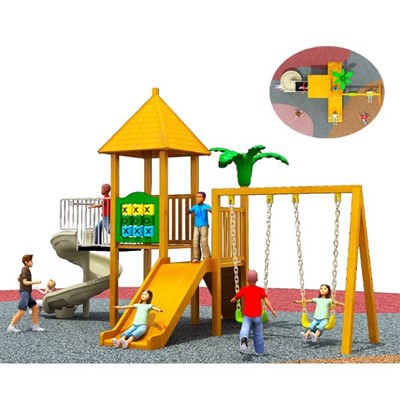
Let’s start with the oldest stuff you’d actually recognize… kind of. Back in the 6th century BCE, the Persians had these “throwing wheels” at festivals—people would spin around on them, toss flowers, and have a good time. Yeah, I know, it sounds like a medieval PE class, but it’s basically the first proto-spinning ride. Then jump to the Middle Ages: European towns had fairs with “giant slides” made of wood and ice (yep, ice slides—perfect for cold places) and acrobatic acts. But the big shift? The 1700s, when Russia invented the rollercoaster we all know. Wait, hear me out: they built 70-foot-tall wooden ice slides in St. Petersburg, and people would sled down them on wooden frames. By the 1800s, French guys swapped the ice for wheels on wooden tracks, and boom—roller coasters were born. That’s the foundation of everything we build now, right? My team still geeks out over those early designs; they were simple, but they had that same “wait, I’m going downhill fast” rush we chase today.
Then came the 1800s’ big playgrounds: pleasure gardens. Think back then—before cars, before TVs, people needed somewhere to escape. Places like London’s Vauxhall Gardens or Paris’s Tuileries Garden had bandstands, food stalls, and simple rides: carousels! Wait, carousels aren’t new—they date to medieval knight training, right? But in the 1800s, they started adding motors, carved horses, and lights. Suddenly, carousels weren’t just for training—they were for fun, for kids, for everyone. I’ve supplied a ton of these over the years; there’s something magical about a classic carousel that never goes out of style.
Now, the part every supplier (like me) obsesses over: the 1900s, when amusement facilities went mainstream. The 1893 Chicago World’s Fair is basically the big bang. That’s where they debuted the Ferris Wheel (invented by George Ferris, duh) alongside the first roller coaster with a loop-the-loop—wait, the loop was terrifying back then! People thought their necks would snap. But it caught on, and suddenly, cities were building amusement parks. Coney Island in New York became the spot, with the Cyclone roller coaster (still open today, insane) and the Tilt-A-Whirl. By the 1920s, theme parks popped up—wait, theme parks, not just amusement parks. That’s when Walt Disney got in the game: Disneyland in 1955 changed everything. It wasn’t just rides—it was a whole story, a whole world. That shifted what we (as suppliers) get asked for: people didn’t just want a rollercoaster, they wanted a rollercoaster that felt like it was in space, or in a fairy tale.
Fast forward a bit, and the 80s and 90s brought tech. Boring old wooden coasters got steel frames—smoother, taller, faster. Then came virtual reality? Wait, no, 90s arcade stuff, then Drop Towers, then inverted roller coasters (you hang below the track, wild). Now? We’ve got coasters that go 100 mph, 4D rides that make you feel like you’re flying, even interactive games that let you “shoot” at stuff on the ride. My job? Keeping up with this chaos—every year, clients come to me asking for the next big thing, and I’m out here talking to engineers, testing prototypes, making sure whatever we build is safe and crazy enough to make people scream (the good kind).
Wait, let’s not sleep on the small stuff—amusement facilities aren’t just giant coasters. There’s mini-golf, which started as a 19th-century Scottish game, then blew up in the US in the 1920s. Bumper cars! Those were invented in the 1920s too, and they’re still everywhere because… who doesn’t want to crash into a friend and laugh? Even bounce houses—wait, those started in the 1950s as military air mattresses, right? Now they’re at every kids’ birthday party. As a supplier, I’ve shipped all of it—from a tiny bounce house for a local rec center to a 100-foot tall Ferris wheel for a new theme park.
The coolest part of this history, though? It’s not just about the rides—it’s about people. The early Persians wanted to celebrate, the 1800s pleasure garden visitors wanted to escape their boring work days, the 1950s kids (and adults!) wanted to feel magic at Disneyland. That’s the throughline. Today, when I work with a client in Texas or Germany or Japan, I’m not just selling a metal frame and a motor—I’m selling a memory. A kid on a carousel grinning so big their cheeks hurt. A group of teens screaming on a coaster as they race their friends. A family taking their first spin on a Ferris wheel, watching the sunset together. That’s why I love this job.
Now, here’s the thing: if you’re a park owner, a rec center manager, or even a mall operator looking to add some fun—you don’t have to start from scratch. Maybe you want a classic carousel to honor that 1800s vibe, or a new VR coaster that’ll be the talk of the town, or even a bunch of bounce houses for a summer event. I’ve been in this game long enough to know what works, what’s safe, and what’ll make your guests come back (and bring their friends).
If you’re ready to chat about your next project—big or small—hit me up. We can geeks out over ride specs, talk budget, or even debate whether the Cyclone is still the greatest coaster ever (spoiler: it is).
Rocking Horse References:
- 《The History of Amusement Parks》 by John F. Kasson, W.W. Norton & Company, 2018.
- Roller Coaster History Museum, "Early Ice Slides and the Birth of the Coaster," accessed 2024.
- Vauxhall Gardens Trust, "The Pleasure Garden Phenomenon in 18th-Century London," 2021.
- International Association of Amusement Parks and Attractions (IAAPA), "Global Amusement Industry Timeline," 2023.
Wenzhou Linmao Technology Co., Ltd.
As one of the leading amusement facilities manufacturers and suppliers in China, we also support customized service. Please feel free to buy high quality amusement facilities made in China here from our factory. For pricelist, contact us now.
Address: Mei’ao Village, Qiaoxia Town, Yongjia County, Wenzhou City, Zhejiang Province, China
E-mail: 951045112@qq.com
WebSite: https://www.linmaoplay.com/
