As a technical sales lead for a company specializing in LSZH cable compounds, I get this question at least twice a week from lighting contractors, electrical engineers, and municipal facility managers: “Are LSZH cable compounds suitable for outdoor lighting cables?” It’s a loaded question, because the answer isn’t a simple “yes” or “no” — it depends on what you’re asking the cable to do, what environment it’s going into, and what tradeoffs you’re willing to make for that LSZH benefit. Let me break this down the way I explain it to my clients, with real-world examples and data that anyone can reference, no jargon I’d skip over in a hallway chat. LSZH Cable Compounds
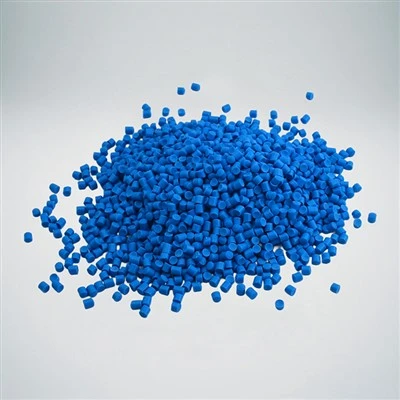
First, let’s start with what LSZH actually is, because a lot of people hear “low smoke zero halogen” and think it’s just a fire safety gimmick. The key here is halogen-based fire retardants, which were standard in cable compounds for decades. When a fire breaks out, those halogens (chlorine, bromine, etc.) burn and release thick, toxic smoke that’s the leading cause of fire-related deaths — way more than actual burns, in most cases. LSZH compounds swap those halogens for aluminum hydroxide or magnesium hydroxide, which smother flames by releasing water vapor when heated, and don’t emit corrosive or toxic fumes. For indoor applications — office buildings, hospitals, schools — that’s non-negotiable for many building codes. But outdoor lighting cables live in a totally different world, so we have to measure LSZH against the specific demands of that environment.
Outdoor lighting cables have four core jobs: resist temperature swings from -40°F to 140°F, stand up to UV radiation from direct sunlight, repel moisture and chemicals from soil or road runoff, and carry electrical current reliably for 20+ years. Traditional outdoor cables, most of which use PVC or cross-linked polyethylene (XLPE), are engineered for exactly those. So why would someone even consider LSZH for that? The answer usually comes down to indirect risks: a broken outdoor cable could arc and start a brush fire in a dry area, or a maintenance worker could accidentally cut into it during repairs where toxic smoke would make escape harder. For a lot of rural wildfire-prone areas in the western U.S., parts of Australia, and Southern Europe, that’s a huge priority. A local government I worked with last year in Northern California was retrofitting 120 miles of street lighting in a oak woodland area, and their fire marshal required LSZH compounds for all new underground cables specifically to reduce fire spread from cable failures. That’s a legitimate use case.
But here’s the catch: LSZH compounds aren’t one-size-fits-all for outdoor environments. Let’s talk about the hard data, because I’ve seen too many engineers spec LSZH without checking the right ratings. First, UV resistance. Most standard LSZH compounds are formulated for indoor use, where UV exposure is negligible. When you put unmodified LSZH in direct sunlight for 6 months, it will start to crack, chalk, and lose its physical properties. I had a client in Arizona make that mistake a few years back: they installed basic LSZH underground lighting cables without a UV-stabilizer blend, and within a year, exposed cable at splice points had degraded so much that rodents chewed through 30% of the lights in their subdivision. The fix here is outdoor-rated LSZH, which we formulate with UV stabilizers and light blockers to withstand 10+ years of direct outdoor sun. It’s a small extra cost — usually 10-15% more than standard LSZH — but it makes all the difference.
Next, temperature performance. Outdoor lighting cables aren’t buried; a lot of them run along utility poles, or are buried shallow (12-18 inches) where soil temperature can spike in summer. Basic LSZH has a continuous operating temperature of around 90°C, which is fine for indoor use, but when summer soil hits 120°F (49°C), that cuts the cable’s current carrying capacity by almost 20%, and over time, it accelerates material degradation. For outdoor use, we modify LSZH compounds to have a continuous operating temperature of 105°C, and a short-term peak of 150°C, which matches the performance of standard outdoor PVC compounds. That’s a non-negotiable spec for any outdoor LSZH cable. I don’t sell any LSZH compound for outdoor lighting that doesn’t have that 105°C rating, because I’ve seen the failure rate on the products that skip it.
Moisture and chemical resistance is another big one. Outdoor cables get exposed to road salt in cold climates, fertilizer in agricultural areas, and diesel runoff from parking lots. Basic LSZH is water-resistant, but some cheaper formulations can absorb moisture over time, which leads to cable degradation in areas with high groundwater. The outdoor-grade LSZH we manufacture uses a cross-linked polyethylene base instead of a polyolefin base, which adds a chemical-resistant outer layer that repels salt, acids, and moisture. We test our outdoor LSZH compounds per IEC 60811-2-1, which is the international standard for cable insulation resistance after water immersion — our samples still have 98% of their insulation strength after 1000 hours in a saltwater bath, which is on par with XLPE, and way better than standard LSZH.
Now, let’s talk about the tradeoffs, because I’d be doing my clients a disservice if I only talked about the benefits. LSZH compounds have a lower tensile strength than standard outdoor PVC, so you have to adjust the cable design to compensate. A cable jacket made from LSZH is a little softer, so if it’s going in areas with heavy construction traffic, you might need to add an extra layer of reinforcement, or spec a thicker jacket. Also, in very cold climates (-40°F or lower), LSZH can get brittle if it’s not properly formulated. We have a cold-resistant blend that works down to -50°F, but that adds another 5% to the cost. For most locations, that’s a worthwhile trade, but if you’re working in Alaska or northern Canada, it’s something to budget for.
Another point people often miss: LSZH cables are not inherently fireproof, they’re fire-retardant. If a cable is fully insulated, and there’s no open flame, an LSZH compound will self-extinguish in 10 seconds or less, per UL 94 V-0 rating, which is the highest for cable materials. But if the jacket is damaged, and the copper conductor is exposed, an LSZH cable will behave almost the same as a PVC one in a fire, because the base polymer is still flammable. So for outdoor lighting, where rodents or construction can damage jackets, you might want to add an armor layer to the LSZH cable, or use a thicker jacket, to prevent that exposure. I recommend that to all my clients installing above-ground outdoor lighting cables, especially in areas with high rodent populations.
Let me share a real example from a client to make this concrete. Last year, a municipal lighting department in Spain was replacing their street lights along a coastal highway, where salt air, UV, and occasional brush fires are a regular risk. They initially wanted to use standard PVC outdoor cables, but their fire department required LSZH to reduce smoke if a cable arc ignited a roadside brush fire. We worked with their engineer to spec our outdoor-rated LSZH compound with UV stabilizers and salt resistance, and added a galvanized steel armor layer to prevent damage from road maintenance equipment. The project cost was 12% higher than the previous PVC installations, but over the first 18 months, they had zero cable failures — and when a small brush fire did ignite near the cables, the LSZH smoke was so low that firefighters were able to work within 10 feet of the cables without respiratory protection, something they couldn’t do with the old PVC cables. That’s the kind of ROI I see with proper outdoor LSZH applications.
Now, who should not use LSZH for outdoor lighting? If you’re installing cables in an area with no wildfire risk, no heavy UV exposure, and no risk of cable damage from construction or rodents, then standard outdoor PVC or XLPE will be cheaper and work just as well. LSZH isn’t a solution for every outdoor lighting project — it’s a targeted solution for projects where fire safety, toxic smoke reduction, or long-term material durability in harsh environments is a priority. I see a lot of clients get lured by the “green” marketing of LSZH, but if they install it in a suburban area with no fire risk, they’re just wasting money on a feature they don’t need.
One final note: always check the third-party certifications for LSZH compounds before you buy. A lot of low-quality LSZH compounds from overseas don’t meet IEC 60332-3 (fire propagation) or IEC 60754 (gas toxicity) standards, which are the two core specs for LSZH. I had a client in Texas a couple years back buy cheap LSZH cables from a supplier who claimed they were outdoor-rated, but when they tested them, the UV stabilizer content was less than 1% (the required minimum is 3%), and the gas toxicity test showed they released cyanide, which is the exact issue LSZH is supposed to avoid. That’s why I always recommend working with a compound supplier who can provide full test reports for every batch, and has experience with outdoor applications specifically.
At the end of the day, LSZH cable compounds can absolutely be suitable for outdoor lighting cables — but only if you pick the right outdoor-grade formulation, match it to your environment’s specific demands, and adjust your cable design to account for the minor differences in physical properties. It’s not a one-size-fits-all product, but for the right projects, it delivers a combination of fire safety, environmental durability, and long-term reliability that’s hard to beat.
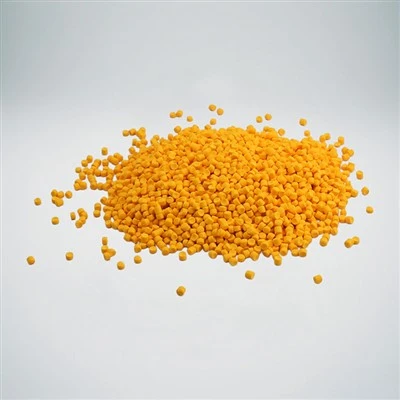
If you’re currently working on an outdoor lighting project and want to walk through whether LSZH makes sense for your needs, or need a custom compound blend tailored to your environment, feel free to reach out to our team to discuss your requirements. We can provide test samples, application guidance, and competitive pricing for both standard and custom LSZH compounds for outdoor lighting applications.
Automotive and EV Cable Compounds References
- International Electrotechnical Commission (IEC). IEC 60332-3-22: Test on cables under fire conditions – Test for vertical flame spread of vertically-mounted bunched wires or cables, Part 22: Apparatus for category A.
- International Electrotechnical Commission (IEC). IEC 60754-1: Test on gases evolved during combustion of cables – Part 1: Determination of halogen acid gas content.
- Underwriters Laboratories (UL). UL 94: Tests for Flammability of Plastic Materials for Parts in Devices and Appliances.
- National Fire Protection Association (NFPA). NFPA 70: National Electrical Code, Article 310 for outdoor cable installation requirements.
- IEEE. IEEE 802.3af: Power over Ethernet (PoE) standards for outdoor lighting network cable performance.
Opta New Materials (Jiangsu) Co., Ltd.
As one of the most professional LSZH cable compounds manufacturers and suppliers in China, we also support customized service. We warmly welcome you to buy bulk durable LSZH cable compounds from our factory. If you have any enquiry about free sample, please feel free to email us.
Address: No.80, Jingang Avenue, Zhenjiang New Area, Zhenjiang City, Jiangsu Province, China.
E-mail: le.yin@optachem.com
WebSite: https://www.optanewmaterials.com/
