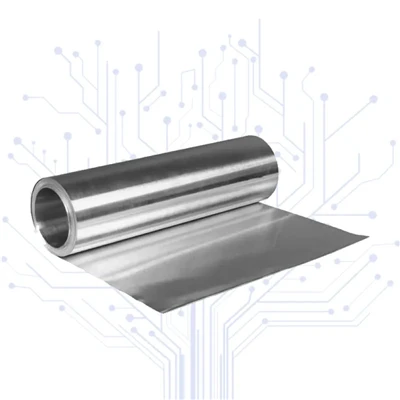
Hey there! I’m a supplier of High – Precision RA Copper Foil, and I often get asked about what factors affect the conductivity of this awesome product. So, I thought I’d take a bit of your time and share my thoughts on this topic. High-Precision RA Copper Foil
1. Purity of the Copper
The first and probably the most obvious factor is the purity of the copper used in the foil. In simple terms, the purer the copper, the better its conductivity. Copper is a well – known good conductor of electricity. But when it’s mixed with other elements, even in small amounts, those impurities can act like roadblocks for the flow of electrons.
Imagine electrons as cars on a highway. The pure copper foil is like a wide, empty highway where cars can zoom along at top speed. But when there are impurities in the copper, it’s like having random bumps and potholes on that highway, slowing down the cars.
Most of the high – precision RA copper foils that we supply have a very high copper purity level. We strive to get as close to that 99.9% (or higher) pure copper mark as possible. This high purity means that our foils can conduct electricity very efficiently, which is super important for applications where even a small loss of conductivity can cause big problems, like in high – tech electronics.
2. Crystal Structure
The crystal structure of the copper foil also plays a huge role in its conductivity. In an ideal situation, copper atoms arrange themselves in a regular, orderly pattern. When an electric current is applied, electrons can move freely through these well – ordered crystals.
However, if the crystal structure is messed up, perhaps due to improper manufacturing processes or external stress, it becomes more difficult for electrons to move. It’s like trying to navigate through a maze instead of walking in a straight line.
We pay a lot of attention to the manufacturing process to ensure that the crystal structure of our high – precision RA copper foils is as uniform as possible. We use techniques like annealing, which is basically a heat – treatment process. This helps to realign the copper atoms and create a more stable and regular crystal structure, improving the conductivity of the foil.
3. Thickness of the Foil
The thickness of the high – precision RA copper foil can have a significant impact on its conductivity. Generally speaking, thicker foils tend to have better conductivity. Why? Well, a thicker foil provides more space for electrons to flow.
Think of it as a water pipe. A wider pipe can carry more water at once compared to a narrow one. Similarly, a thicker copper foil can carry more electrons, which means better conductivity.
But it’s not always that simple. In some applications, using a very thick foil might not be practical. For example, in some ultra – thin electronic devices, space is extremely limited. So, we need to strike a balance between the thickness of the foil and the required conductivity. We offer a variety of thickness options to meet different customer needs, making sure that they get the right balance for their specific applications.
4. Surface Roughness
Surface roughness is another factor that can affect the conductivity of high – precision RA copper foil. A rough surface can increase the resistance to electron flow. When the surface is rough, electrons have to travel a longer and more complicated path, which slows them down.
On the other hand, a smooth surface allows electrons to move more easily. We use advanced manufacturing techniques to control the surface roughness of our copper foils. By keeping the surface as smooth as possible, we can enhance the conductivity of the foil.
5. Temperature
Temperature has a well – known effect on the conductivity of metals, and copper is no exception. As the temperature increases, the conductivity of copper foil decreases. This is because at higher temperatures, the atoms in the copper vibrate more vigorously. These vibrations can interfere with the flow of electrons, making it harder for them to move through the foil.
In applications where the temperature can vary a lot, like in automotive electronics or power electronics, this is an important consideration. We always work with our customers to understand their operating temperature ranges and recommend the appropriate high – precision RA copper foils that can maintain good conductivity even under different temperature conditions.
6. Alloying Elements
Sometimes, small amounts of alloying elements are added to the copper to improve certain properties. For example, adding a bit of silver can enhance the strength and heat resistance of the copper foil. However, these alloying elements can also affect the conductivity.
Each alloying element has a different impact on conductivity. Some might reduce it more than others. So, when we are designing our high – precision RA copper foils and adding alloying elements, we carefully consider the trade – off between the desired properties and the conductivity. We aim to find the right combination that gives the best overall performance for our customers’ applications.

In conclusion, there are several factors that can affect the conductivity of high – precision RA copper foil. As a supplier, we are always working hard to control these factors and provide the best – quality products to our customers. Whether it’s ensuring high purity, a proper crystal structure, the right thickness, or a smooth surface, we leave no stone unturned.
Ra Copper Foils If you’re in the market for high – precision RA copper foil and want to learn more about how our products can meet your specific conductivity requirements, don’t hesitate to reach out. We’d love to have a chat and discuss your needs. Let’s work together to find the perfect copper foil solution for your project!
References
- "Electrical Conductivity of Metals" – Handbook of Materials Science
- "Copper Foil Manufacturing Processes and Their Impact on Properties" – Journal of Metallurgical Engineering
- "The Effect of Temperature on Electrical Resistance in Conductors" – Physics Today Magazine
Civen Metal Material (Shanghai) Co., Ltd.
Address: Workshop 2-2, No.1888 Xiechun Road, Jiading District, Shanghai, 201804, P.R.China
E-mail: sales@civen.cn
WebSite: http://www.civenmetal.com/
