Hey there, fellow industry enthusiasts! As a supplier of cold rolling equipment, I’ve seen firsthand how this technology can transform materials. Today, I want to dive into the fascinating world of what happens to a material’s microstructure during cold rolling using our top – notch cold rolling equipment. Cold Rolling Equipment

Let’s start with a quick refresher. Cold rolling is a process where metal sheets or strips are passed through a set of rollers at room temperature. Unlike hot rolling, which is done at high temperatures, cold rolling doesn’t involve any heat treatment during the primary deformation process. This difference in temperature has a huge impact on the material’s final properties and, most importantly, its microstructure.
So, what exactly is microstructure? In simple terms, it’s the structure of a material that you can only see under a microscope. It includes things like grains, phases, and various defects. And understanding how cold rolling changes these micro – features is crucial for getting the desired mechanical properties in the end product.
When we start the cold rolling process, the first thing that happens to the material’s microstructure is grain deformation. Grains are like tiny crystals within the metal. As the material passes through the rollers, these grains get elongated in the direction of rolling. It’s kind of like taking a ball of clay and rolling it into a long, flat piece. The grains start off as more or less equiaxed (similar in all dimensions), but as cold rolling progresses, they become more and more flattened.
If you slice the rolled material parallel to the rolling direction and look at it under a microscope, you’ll notice that the grains have a long, thin shape. This elongation of grains has a significant effect on the material’s mechanical properties. For example, it generally increases the material’s strength. The elongated grains create more barriers to the movement of dislocations (tiny imperfections in the crystal structure), which makes it harder for the material to deform plastically. So, in short, the cold – rolled material becomes stronger and more resistant to being bent or stretched.
Another important change that occurs during cold rolling is an increase in dislocation density. Dislocations are basically line defects in the crystal lattice of the material. When we apply pressure during cold rolling, more dislocations are created, and they start to move and interact with each other.
Think of dislocations liketraffic on a busy road. As more and more dislocations are generated during cold rolling, they start to pile up and get tangled with one another. This dislocation tangling is another reason why the cold – rolled material becomes stronger. But it also has a downside. The increased dislocation density makes the material more brittle. With so many dislocations stuck together, the material has a harder time deforming in a smooth, ductile way. So, there’s sort of a trade – off between strength and ductility during cold rolling.
Let’s talk about texture development. Texture in the context of materials refers to the preferred orientation of grains. During cold rolling, the grains tend to align themselves in a specific direction. This is because the forces applied by the rollers push the grains into a more organized state.
The development of this texture can have both positive and negative effects. On one hand, a well – defined texture can enhance the material’s performance in certain applications. For example, in electrical steel used in transformers, a specific texture can reduce energy losses. On the other hand, an unwanted texture can lead to anisotropy, which means the material has different properties in different directions. This can be a problem if you need the material to perform uniformly in all directions.
As we continue the cold – rolling process, the deformed grains and high dislocation density can also lead to the formation of sub – grains. Sub – grains are smaller regions within the larger grains that have a slightly different orientation. These sub – grains are formed as the dislocations start to rearrange themselves.
The formation of sub – grains is a bit like a neighborhood getting divided into smaller blocks. These sub – grains can act as additional barriers to dislocation movement, further contributing to the material’s increased strength. Additionally, sub – grains can affect the material’s recrystallization behavior during subsequent heat treatment, which we’ll touch on a bit later.
Now, let’s consider the impact of the reduction ratio in cold rolling. The reduction ratio is the ratio of the initial thickness of the material to its final thickness after rolling. A higher reduction ratio means more deformation is being applied to the material.
When we have a high reduction ratio, the changes in the microstructure are more pronounced. The grains get even more elongated, the dislocation density becomes much higher, and the texture becomes more strongly developed. However, there’s a limit to how much deformation a material can handle during cold rolling. If we push the reduction ratio too high, the material can start to crack or develop other defects, which obviously isn’t good for the final product.
Once the cold rolling is complete, what happens next? Well, often, the cold – rolled material will undergo a heat treatment process called annealing. Annealing involves heating the material to a specific temperature and then cooling it slowly. This process helps to relieve the internal stresses that built up during cold rolling and can also change the microstructure again.
During annealing, recrystallization occurs. Recrystallization is the process where new grains with a lower dislocation density form in place of the deformed and highly dislocated grains from cold rolling. These new grains are more equiaxed, similar to the grains in the original material before cold rolling. As a result, the material becomes softer and more ductile again. However, the texture that developed during cold rolling may still be present to some extent, and this can affect the material’s properties after annealing.
As a cold rolling equipment supplier, we understand the importance of all these microstructure changes. That’s why we’ve designed our equipment to give you the best control over the cold – rolling process. Our rollers are precision – engineered to apply uniform pressure, which helps to ensure consistent grain deformation and texture development. We can also adjust the speed and reduction ratio according to your specific material requirements.
Whether you’re looking to increase the strength of your metal products, develop a specific texture, or just need a reliable cold – rolling solution, our equipment is up to the task. We’ve worked with a wide range of industries, from automotive to aerospace, and we know how to meet your unique needs.
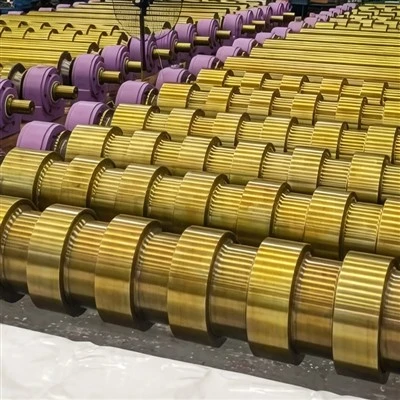
If you’re in the market for high – quality cold rolling equipment, don’t hesitate to get in touch. We’re here to answer all your questions, provide technical support, and help you find the perfect solution for your business. Let’s work together to take your materials processing to the next level!
Heating Furnace References:
- Callister, W. D., & Rethwisch, D. G. (2018). Materials Science and Engineering: An Introduction. Wiley.
- Doherty, R. D., Hughes, D. A., Humphreys, F. J., Jonas, J. J., Jonas, P., & Kassner, M. E. (1997). Recrystallization and Related Annealing Phenomena. Elsevier.
Jiangsu Dongfang Whole-Set Equipment Manufacturing Group Co., Ltd.
We are one of the most professional cold rolling equipment manufacturers and suppliers in China, also support customized service. With abundant experience, we warmly welcome you to buy durable cold rolling equipment from our factory. If you have any enquiry about pricelist, please feel free to email us.
Address: No. 9, Industrial Park, Xinqiao Town, Jingjiang City, Jiangsu Province
E-mail: dfctwm@163.com
WebSite: https://www.dongfangequip.com/
