Hey there, fellow chocolate lovers (and anyone just tired of dealing with dairy in their treats)! I’m Mia, and I run that tiny dairy-free stall you’ve probably passed at local farmers markets, pop-up food fests, and even a few neighborhood grocery store events. A question I get all the time when someone strolls up, squints at our display, and leans in like they’re testing if I’ll be honest: “Can I find dairy-free chocolate at a dairy-free stall?” Dairy Free Stall

It sounds like a no-brainer, right? But here’s the thing—way too many people walk in assuming all “dairy-free” tagged stalls just dump a random vegan bar in a jar and call it a day. And let’s be real, that’s not a great experience. I’ve been doing this for three years now, and I’ve seen folks leave frustrated because they thought they’d get a creamy, melt-in-your-mouth chocolate that’s actually worth craving, only to end up with something that tastes like burnt cocoa powder and sad oil. So today, I’m breaking this down straight, no fluff—what actually goes into a dairy-free stall, why our chocolate is different, and how you can make sure you’re not wasting your time (or your taste buds) when you stop by.
First, let’s get one definition out of the way fast, because this is where a lot of confusion starts. When we say “dairy-free,” that’s not just skipping milk solids from cow’s milk. It means we’re actively avoiding all milk-derived ingredients—so no whey, no casein, no lactose, and definitely no hidden butterfat that some cheap brands sneak in to make their “vegan” chocolate taste smoother. For our stall, I don’t mess around here: every single product we stock has to pass a basic test for those hidden dairy bits, but we also go a step further because I know a lot of the people who come to us aren’t just avoiding dairy for fun—they’re lactose intolerant, have a cow’s milk allergy, or follow a vegan diet for ethical reasons. Cutting corners here isn’t an option for me, because if I mess up, someone could end up having a reaction that ruins their day. That’s why our chocolate isn’t just “dairy-free”—it’s also vegan, gluten-free, and tested with a third-party lab to make sure it’s cross-contamination free, especially for anyone with severe allergies.
Now, let’s talk about why a lot of people think dairy-free chocolate is, well, mediocre. Traditional chocolate uses cocoa butter, sugar, and milk products to get that rich, creamy mouthfeel. When you take the milk out, you can end up with something that’s either too dry, too bitter, or tastes like a handful of vegetable oil mixed with cocoa—because some brands just swap milk for random oils (like palm oil, which isn’t always great, or canola, which has a weird aftertaste) and call it a day. That’s not the kind of chocolate I want to sell. So for our stall, I work directly with a small batch cocoa maker out of Portland—they’ve been doing this for 12 years, and they don’t cut corners. Their dairy-free chocolate uses only cocoa butter (not oil), unrefined cane sugar, and cocoa beans from fair-trade farms in Ecuador and Ghana. No fillers, no weird additives, just that smooth, melt-on-your-tongue texture that you’d expect from a high-quality chocolate. And let’s be clear—this isn’t the kind of stuff you’d find on a grocery store shelf next to the $1.99 bars. This is the good stuff.
I get why people might doubt that a dairy-free stall would have good chocolate. Before I started this business, I was that person too. I’d spent years dealing with a lactose intolerance that made me give up chocolate entirely, until I stumbled on a random pop-up stall in Brooklyn that had actual decent dairy-free bars. I left thinking, “Why isn’t everyone doing this?” So when I decided to start my own stall, I made it a mission to not just sell chocolate that was dairy-free, but chocolate that people would choose over regular chocolate if they didn’t have dietary restrictions. That means we have different kinds too—like milk chocolate style (made with oat milk instead of cow’s milk, which adds that subtle creaminess without the dairy), dark chocolate with sea salt, even truffles rolled in crushed nuts. Last month, a guy came through who swore he’d never had a dairy-free chocolate that didn’t taste like cardboard, and he left with a bag of truffles and ordered a case for his office. That’s the win for me.
But wait—what if you’re at a dairy-free stall and you don’t see chocolate right away? I’ve had people ask that too. Sometimes, because our stall is small (it’s just me and a part-time helper on market days), we might have a lot of other products—like dairy-free fudge, cookie dough bites, or coconut milk-based ice cream. But chocolate is always front and center. I put a big wooden display at the front of the stall with all our chocolate bars, so you can’t miss it. If it’s not there, just ask—we might have some stashed in the cooler because the heat makes the cocoa butter melt, or we might have a limited edition flavor that we just unpacked. And for the folks who order in bulk (like local cafes or catering companies), we have even more varieties that we don’t display at markets—like chocolate chips for baking, or melting wafers for making desserts. That’s where things get fun, because people start getting creative with dairy-free treats.
Here’s something important to note too: not all “dairy-free stalls” are the same. I’ve seen other pop-ups that call themselves dairy-free, but they just use the same chocolate as regular brands, just repackage it. That’s a problem because those products might have hidden dairy, or they might not cross-contaminate free, which is a big deal for people with allergies. For our stall, we only work with manufacturers that have a dedicated dairy-free facility, so there’s no chance a bar that’s supposed to be dairy-free got mixed with a regular milk chocolate bar during production. That’s non-negotiable for me. I’d rather sell less chocolate than risk someone getting sick because I cut a corner on safety.
Another question I get a lot: “Does dairy-free chocolate taste different?” The honest answer is—maybe a little, but not in a bad way. The oat milk or cocoa butter adds a subtle, nuttier or creamier note that regular chocolate doesn’t have. For example, our milk style dairy-free chocolate has a mild, sweet flavor that’s almost identical to regular milk chocolate, but with a tiny hint of oat that makes it feel extra creamy. Our dark chocolate is 70% cacao, so it’s a little more bold, but we add a touch of cane sugar to balance it out, so it’s not too bitter. Last year, we did a taste test at a market where we had three regular chocolate bars and three dairy-free bars, and 60% of the people who tried them said they preferred the dairy-free ones. That was a pretty wild moment for me—proof that you don’t have to sacrifice flavor when you go dairy-free.
Now, let’s talk about what happens if you come to my stall and don’t find what you’re looking for. I’m not perfect, and sometimes we sell out of a flavor (looking at you, sea salt dark chocolate—we sell out of that every single Saturday). If that happens, I always ask for your number or email, and I’ll text you when we restock. A lot of regulars do that, and it’s been great because it lets me know what flavors people actually want. Recently, someone asked for dairy-free chocolate with fruit, so I worked with my cocoa maker to add dried raspberries to the dark chocolate, and it’s now one of our bestsellers. That’s the cool thing about running a small stall—you can adapt based on what your customers want, instead of being stuck with a corporate product line.
I should also mention that we’re not just a market stall. We do pop-up events at local offices, too—so if you’re a manager who’s looking for a dairy-free treat for your team, we can set up a small station or drop off a case of bars. And if you’re a home baker who needs dairy-free chocolate for cookies or brownies, we have bulk chocolate chips that work perfectly for baking—no weird texture after melting, either. I’ve had people tell me that using our chocolate in their chocolate chip cookies makes the whole batch taste way better, even to people who aren’t dairy-free. That’s the goal, right? To make dairy-free food that’s good enough for everyone, not just the people who can’t have dairy.
So, to wrap this up: yes, you can absolutely find dairy-free chocolate at a dairy-free stall. But it’s not just any chocolate—it’s the good stuff, the kind that’s made with quality ingredients, tested for hidden dairy, and designed to taste amazing, not just “not have dairy.” I’ve been doing this long enough to know that there’s a lot of misinformation out there about dairy-free food, and a lot of people who think they have to settle for less. My job is to change that one chocolate bar at a time.
If you’re a local business owner, event planner, or even someone who just loves dairy-free chocolate and wants to stock up, let’s connect. We can chat about bulk orders, custom flavors, or even bringing our stall to your next event. No awkward phone calls, no hidden fees—just a conversation about great chocolate and how to make sure everyone gets to enjoy it.
Cattle Drinker References:
- International Food Information Council Foundation. (2022). Dairy-Free Alternatives: What Consumers Need to Know About Labeling and Nutrition.
- European Food Safety Authority. (2021). Allergen Labeling and Cross-Contamination Risks in Plant-Based Food Products.
- Fairtrade International. (2023). Cocoa Sourcing Practices and Quality Standards for Plant-Based Chocolate.
Qingdao Shengxin Metalware Co., Ltd.
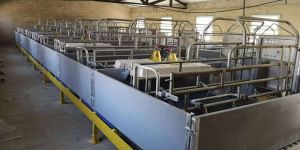
Qingdao Shengxin Metalware Co., Ltd. is one of the leading dairy free stall manufacturers and suppliers in China, providing the best quality dairy free stall with competitive price. Welcome to contact our factory to place orders.
Address: Wangtai Industrial Zone, Hungdao District, Qingdao City, Shandong Province
E-mail: sale@sxequipment.com
WebSite: https://www.sxequipment.com/
