If you’ve ever stood near a power plant—whether a coal-fired, natural gas, nuclear, or even a big renewable one like a concentrated solar facility—chances are you’ve passed a wall of pipes, valves, and control panels humming 24/7. Most folks just see a maze of metal, but if you ask the maintenance crew or the process engineers who work there, they’ll tell you the globe valve is the unsung workhorse keeping the whole thing from grinding to a halt. As someone who’s been supplying globe valves for over a decade now (let’s be real, I’ve shipped enough of these to every corner of North America and parts of Europe to know a thing or two), I’m here to break down why these valves matter more than you might think for power generation. Globe Valve
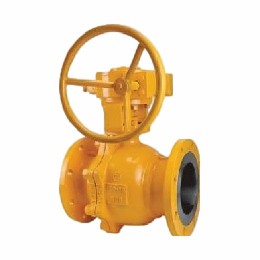
First off, let’s cut the jargon and talk basics. A globe valve isn’t some shiny, overcomplicated part—its design is simple at its core. It’s got a spherical body (hence the name “globe”), a movable disc inside that seals against a stationary seat, and a stem that lets you crank it open or closed, or dial it to a mid-position. Unlike gate valves, which are just all the way open or all the way closed (great for on/off jobs but bad for fine control), globe valves can do way more. That’s the big reason they’re non-negotiable in power systems, where you need precision day in and day out.
Let’s walk through how a typical power plant works, because that’s where you’ll find every globe valve doing its job. The core cycle for just about any power plant is the Rankine cycle: you heat water to make high-pressure steam, send that steam spinning a turbine to make electricity, then cool the steam back into water to reuse it. Every step of that cycle has globe valves doing critical work.
Start at the boiler, where water gets heated to 1,000+ degrees Fahrenheit under extreme pressure. Before that water even enters the boiler, globe valves are controlling the flow of feedwater. If too much feedwater rushes in, the boiler can overfill, causing water hammer— that loud, banging sound in pipes that can crack fittings or damage equipment. If too little gets in, the boiler runs dry, which is a safety hazard (no exaggeration here—we saw a plant in Ohio a couple years back skip regular globe valve checks and end up with a $2 million repair bill from a dry boiler incident). Globe valves let engineers tweak feedwater flow by small increments, keeping the water level in the boiler dead on target. That level control is make-or-break: even a 5% swing can throw the whole cycle off, lower efficiency, or risk shutdowns.
Once the steam is generated, it’s sent to the high-pressure turbine. The valve that controls how much steam enters the turbine? You guessed it—globe valve. This isn’t a random pick. Turbines hate sudden pressure surges, and gate valves can’t handle the precise flow adjustments needed here. A globe valve’s disc moves up and down gradually, so you can ramp steam flow up or down smoothly as the turbine spins up or slows down. For plants that need to adjust power output (like when a grid needs more electricity during peak hours, or less at night), globe valves let engineers dial turbine speed without jolting the system. We supply custom-trimmed globe valves for this exact job—they’re cut to specific flow rates so the turbine gets exactly what it needs, no more, no less.
Next, after the steam passes through the high-pressure turbine, it’s routed back for reheat (in combined-cycle plants, anyway) before moving to the intermediate and low-pressure turbines. More globe valves here, controlling reheat steam flow to maintain the temperature needed for efficiency. Then comes the condenser, where steam is cooled back into liquid water. Condensate pumps move that cooled water back to the boiler, and globe valves here control condensate flow to keep the condenser vacuum stable. Vacuum is key in the condenser—higher vacuum means more efficient steam expansion in the turbines, which means more electricity with less fuel. A globe valve that’s slightly misadjusted can drop vacuum by 10% or more, cutting a plant’s overall efficiency by a noticeable amount, costing them tens of thousands in fuel every month.
Let’s not forget safety, which is another huge part of the power plant puzzle. Power systems run at insane pressures and temperatures—think 3,000 PSI steam, or superheated water near its boiling point. Globe valves are built to handle that, but they also act as safety shutoffs in emergency situations. If a pipe breaks, or a sensor detects an overpressure event, the plant’s control system can trigger a globe valve to close in seconds, isolating the faulty section before the problem spreads. Unlike some other valves, globe valves’ tight seal when closed means no dangerous fluid leaks—critical for preventing fires, explosions, or toxic material releases (especially important for coal plants with ash slurry, or nuclear plants with coolant water). I’ve had customers tell me their globe valves have saved them from at least three unplanned shutdowns over the years—stuff no one talks about until it doesn’t happen.
Wait, let’s get into the nitty-gritty of why globe valves are better than other options for these jobs. Gate valves, like I said, are simple on/off, but they’re terrible for throttling. If you use a gate valve to adjust flow constantly, the disc will wear down quickly, leading to leaks. Ball valves are good for quick on/off, but their design isn’t great for frequent, precise adjustments over long periods. Globe valves, on the other hand, have a larger disc surface that distributes pressure evenly, so they handle repeated throttling and high pressure/temperature way better. The only downside? They’re not ideal for full open/closed long-term, but power plants don’t run their control valves fully open forever—they rely on throttling all the time, which is exactly what globe valves do best.
Now, as a supplier, I’ll be real with you: not all globe valves are created equal. Power plants don’t need off-the-shelf valves from a hardware store—they need ones built to withstand 20+ years of continuous operation, with materials that don’t corrode in high-temperature steam or slurry. A lot of places cut corners by using cheaper cast iron valves, but those crack after a few years in a power plant’s harsh environment. That’s why we supply forged steel globe valves, sometimes alloyed with chrome or molybdenum, that resist wear and corrosion. We also build custom-trimmed discs— the part that moves to control flow— for specific applications, so a turbine control valve isn’t the same as a feedwater valve, and that makes all the difference in performance.
What about common problems we see, and how we help fix them? A lot of plants wait too long to replace their globe valves, and end up with issues like leaking stems, worn seats, or stuck discs. Those problems lead to inefficient operations, unplanned shutdowns, and higher maintenance costs. We do annual check-ins with our clients, not just when they need a new valve. We work with their maintenance teams to assess wear, recommend when to re-seat a valve or replace it, and even stock spare parts on site for emergency repairs. Last year, a nuclear plant in Michigan had a feedwater globe valve start leaking—we had a replacement valve shipped to them in 48 hours, so they only had 8 hours of downtime instead of the 3 days it would’ve taken if they ordered from a generic supplier. That’s the value of working with someone who knows the power industry, not just selling valves out of a catalog.
Let’s also touch on new power systems, because globe valves aren’t just for old coal plants. Renewable energy plants like concentrated solar power (CSP) use steam cycles too, and they need globe valves to control heat transfer fluid flow. Even big battery storage facilities that use thermal storage rely on globe valves to manage heat transfer. As more plants transition to cleaner energy, the role of globe valves doesn’t go away—it just adapts. We’ve started supplying globe valves for CSP plants built in the Southwest U.S., designed to handle molten salt instead of water, because the core need for precise flow control and reliability is the same.
So next time someone asks you what a globe valve does in a power generation system, you can skip the textbook definitions. It’s not just a pipe part—it’s the component that keeps the steam flowing at the right pressure, prevents costly accidents, keeps the plant efficient, and makes sure the lights stay on for millions of people.
If you’re a plant engineer, maintenance manager, or procurement lead who’s been dealing with worn globe valves, unexpected shutdowns, or just want to upgrade to more reliable parts, I’m here to help. We don’t push generic valves or lock you into long-term contracts—we listen to your specific needs, whether you need a replacement valve for an old boiler or custom parts for a new CSP project. Reach out to discuss your requirements, and we’ll work with you to find the right solution that fits your budget and keeps your plant running smoothly.
Ball Valve References
- Power Plant Operations Handbook, 7th Edition. McGraw-Hill Education
- Valve Selection and Sizing, 3rd Edition. Cameron Hydraulic Data
- U.S. Department of Energy: Best Practices for Power Plant Component Reliability, 2021
- Concentrated Solar Power Technology and Applications. CRC Press, 2022
Xiongxiang Valve Group Co., Ltd.
As one of the most professional globe valve manufacturers and suppliers in China, we’re featured by quality products and good price. Please rest assured to wholesale cheap globe valve for sale here from our factory. Contact us for more details.
Address: Building 1, No.306, 12th Binhai Road, Jinkai District, Wenzhou City, Zhejiang Province, China
E-mail: info@xiongxiangvalve.com.cn
WebSite: https://www.steelvalvegroup.com/
